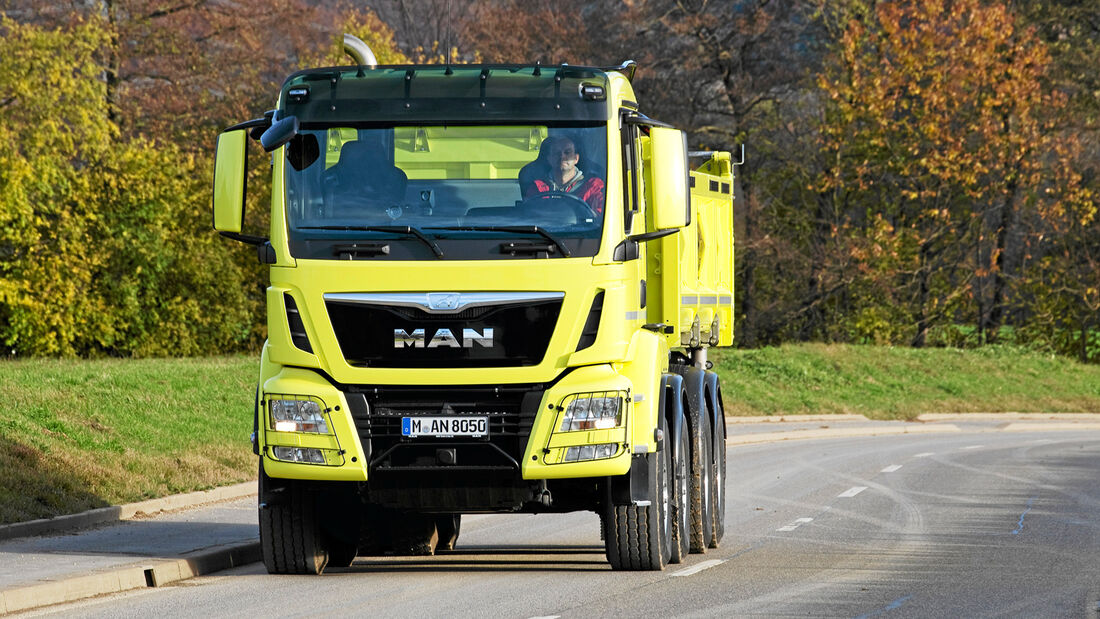
It´s said that women age, but men mature. But what is the equivalent for dump trucks? After all, they are the outdoorsmen of trucks. Let's put it this way: a bit of a rustic nature doesn´t hurt. It also doesn´t matter much if a sense of tradition and traces of wind and weather show through. This at least lets you know that such a rugged individual is more likely to fill quotas than one who constantly chases the latest fads with ostentation and a lot of hubub.
1,800 bar maximum injection pressure and two-stage charging
It took something as big as Euro 6 knocking on the door to motivate MAN to make a few modifications to its TGS, which was introduced in 2007. Virtually nothing changed in the driver´s cab itself. There was some retouching on the exterior to give the heavy MAN a facelift. That´s not very much. But the new Euro 6 engines underneath it did manage to prompt some interest. This is because MAN went its own way with these engines—to the extent that neither a variable turbocharger nor injection pressures above 2,000 bar play a role. A relatively low maximum injection pressure of 1,800 bar and two-stage charging instead characterize the MAN Euro 6 engines, some old, familiar versions of which are no longer even represented.
Not only was the mighty V8 retired, but engines like the 10.5-liter D20 were also largely phased out. Whereas the Euro 5 version used to be available with up to 440 hp in the TGS, the Euro 6 unit now goes only up to 360 hp.
The 12.4-liter D26 engine, which is around 100 kilograms heavier in the base version, has now taken over the D20´s job in the higher power classes—formerly available up to 540 hp, it is now responsible for the power classes from 400 to 480 hp. The golden mean in the D26 range, the 440-hp variant, powers the test vehicle. However, hardly any change from before would have been noticeable if the Euro 6 version didn´t provide the maximum torque down to 900 rpm, instead of down to 1,000 rpm in the previous Euro 5 version. Except for this difference, the 440-hp engine curves of the Euro 5 D20 and the Euro 6 D26 are identical.
2,100 Nm as the maximum torque
This specifically means 2,100 Nm as the maximum torque. It is available from 900 to 1,400 rpm. This is plenty for a four-axle vehicle with a gross vehicle weight of 32 tons. Even the steep and serpentine climb from Lower Swabia to the Swabian Alb plateau is never too difficult for the MAN 34.440 horse power train.
The rear-axle ratio of 4.0 contributes to the harmony between the engine and the overdrive gearbox from ZF (AS 2330OD). The tachometer needle settles between 1,300 and 1,400 rpm at a good highway speed of around 85 km/h. It´s thus no problem to leave the vehicle in twelfth gear even when chugging down country roads: 1,030 rpm is indicated at a speed of 65 km/h, thus ensuring generous traction reserves.
This combination is impressive under tough off-road conditions too, given that the off-road mode of the automatic gearbox is refreshingly powerful. With a top speed of 7.2 km/h in first gear, the 35.440 is not the epitome of power, but it does get by. The low reverse gear already tops out at 7.8 km/h, however—this is not very good for the clutch in extreme cases.
Less would be more; applies to the rear-view mirrors
This kind of reserved pragmatism is a common theme in the four-axle TGS. The only extravagance this truck allows itself is the bulky mirrors. They clash with the otherwise understated character and are anything but practical, because they block out much of the view through the side windows. Less would be much more when it comes to the rear-view mirrors, especially on often crowded construction sites.
After all, the 35.440 already puts this motto into practice somewhat consistently when it comes to the payload. Adjusted for the auto omnibus standard specification, with a 300-liter steel tank and 315/80 R 22.5 tires, the chassis weighs just slightly more than 10.3 tons without sacrifices in the proven M-driver´s cab.
Despite a width of 2.30 meters, the M-driver´s cab from MAN offers 4.77 cubic meters of space inside. This is a decent value. Caveat: The overall height of the (empty) vehicle is nevertheless only slightly more than 3.2 meters. The driver´s cab therefore comfortably fits underneath old silo loading stations, which usually limit the height to no more the 3,40 meters.
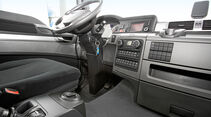
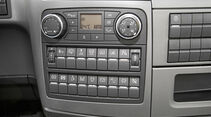
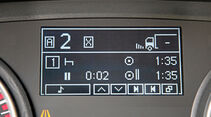
However, other features in the TGS are designed as if time had stood still in 2007. There are plenty of examples, including the monochrome display on the dashboard, operation of the automatic gearbox using a knob at hip height in some cases, and the handbrake lever also located there. Better solutions have been found elsewhere for all this.
Water-operated PriTarder
On the other hand, the MAN TGS also features great refinements like the water-operated PriTarder. This primary retarder weighs around 50 kg less than the usual secondary retarders. Particularly on construction sites, it is also a blessing because it develops its power not as a function of speed, as in conventional secondary retarders, but rather as a function of revs.
830 braking horsepower available
In practice, this means that 830 braking horsepower (including engine brake) is available despite creeping in first gear, for example. The driver needn't fear even the steepest of ramps.
MAN´s in-depth knowledge of dump trucks is demonstrated by two more brake extras in the TGS. For one thing, it features a special paver brake that applies brake pressure so gently that the vehicle can be pushed by a road paver but nevertheless can´t roll away on its own. For another, the driver can use a so-called steering brake with the following function: By selectively braking the rear wheels on the inside of a curve, this clever device actively prevents understeer (up to <br />30 km/h) while reducing the off-road curve radius. Both systems can be activated using a button on the dashboard.
Another strength of the TGS is its well-balanced chassis. Both with the vehicle empty and loaded, the combination of three-leaf parabolic springs at the front and a five-leaf parabola package at the rear shows no weaknesses at all. The four axles of the TGS designed for a gross vehicle weight of 35 tons masterfully cope with even extremely difficult roads.
It is in details like these that the old master demonstrates its skills to the fullest. In other details—especially the operator controls—it cannot deny lagging somewhat behind the times. A little model maintenance couldn´t hurt. Because, unlike older grand masters, outdoorsmen like these dump trucks can afford to be mature. But their age shouldn´t be quite so immediately obvious.
Here´s to something new
The dump truck test route of auto omnibus traditionally begins in Lower Swabia at the base of the Swabian Alb, climbs steeply to the Alb escarpment and traverses a short distance along the plateau to the quarry, where the dump truck drops off its load. It´s just too bad that this test route is near the Aichelberg Mountain and the Drackenstein Slopelocal communities are increasingly banning vehicles weighing twelve tons or more from their roads. The current test route for dump trucks has now also fallen victim to this ban.
The new route will remain true to the extremely tough route profile with its challenging inclines, but it will follow a new course: beginning with a slightly sloping highway section and then continuing up the Lenningen Valley to the Alb plateau, from where the dump truck will return empty to the loading station in the valley as usual.